
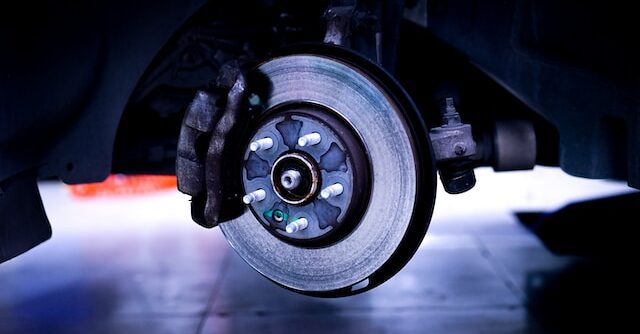
Ideally, resurfacing a rotor provides a flat, smooth surface that minimizes noise-producing vibrations and provides proper friction. It can also address excessive rotor runout that results from manufacturing tolerances stacking up on the rotor or hub.
Rotor resurfacing can also prevent damage to the rotor caused by scoring from old brake pads. This damage may cause pulsations in the brake pedal or uneven vehicle motion while slowing down.
Pad Replacement
A squealing brake pedal is one of the clearest warning signs that your pads are low and should be replaced. Your rotors may also display severe wear and pitting, blue spots or rings, deep rust or extreme grooves that require resurfacing.
Resurfacing restores a flat and even surface to your rotor friction surfaces. This improves brake performance and extends pad life. A smooth rotor will also prevent uneven wearing that can lead to brake pulsations.
Depending on your car, your mechanic will determine whether resurfacing makes sense. Resurfacing a rotor is not recommended if it will be thinner than its minimum thickness specification. Resurfacing could be smart if your rotors have sufficient metal and no hard spots, cracks or severe grooving.
Rotor Replacement
Several parts come together to slow and stop your vehicle when the brake pedal is pressed. A small part of this system is the rotor, which, when stopping your car quickly, needs to absorb and dissipate heat efficiently.
A smooth rotor surface allows the brake pads to press against it evenly, helping avoid abrasion and premature wear. Generally, a resurfacing job removes a microscopic layer from your rotors’ front and rear surfaces, which can help eliminate grooves, pits or other uneven spots on the rotor surface.
However, a technician must measure a rotor’s thickness to determine whether it can resurface. Each rotor has a minimum thickness specification established by the manufacturer, and resurfacing cannot occur if the resulting rotor is thinner than this limit. In this case, a replacement is the best option.
Brake Bleeding
Traditionally, a technician would machine (or resurface) rotors whenever they installed new brake pads. This ensures that the rotor’s smooth surface mates properly with the brake pads for friction-free braking.
This type of brake repair services West Palm Beach FL can be costly, but it’s also a lot easier than replacing the entire rotor. Your brake mechanic will remove the rotors, turn them on a grinding machine, and remove a thin layer of metal from the rotor’s surface to make it smooth and spin true.
Typically, a resurfaced rotor will last for a few more brake pad replacements. However, you should consider replacing your rotors if they are very thin or have visible damage, such as discoloration and hard spots. It’s important to note that hard bumps on your rotors result from excessive heat caused by overheating. These hard spots can cause uneven wear and heat distortion, reducing your brake’s efficiency. This is a good indication that it’s time to replace your rotors.
Brake Inspection
When your brake system is working properly, you will not only feel the vehicle’s stopping power increase but also notice that it rides much smoother. This is why thoroughly inspecting your brake system at each maintenance visit is so important.
Inspecting disc brakes means looking at rotors and pads. The rotors are the iron discs found behind each wheel that, when you hit your brakes, get squeezed by pistons inside the brake calipers. This causes the friction that stops the wheels and the vehicle. The brake pads on either side of the rotors must be checked for excessive wear to ensure that metal is not rubbing against metal.
Checking pushrod stroke is another critical step in a brake inspection. Many manufacturers mark pushrods with indicator markings that indicate when a brake is out of adjustment. However, CVSA guidelines stress that checking the free-stroke distance only provides limited insight into brake adjustment and does not guarantee that a brake is within accepted adjuster limits.

